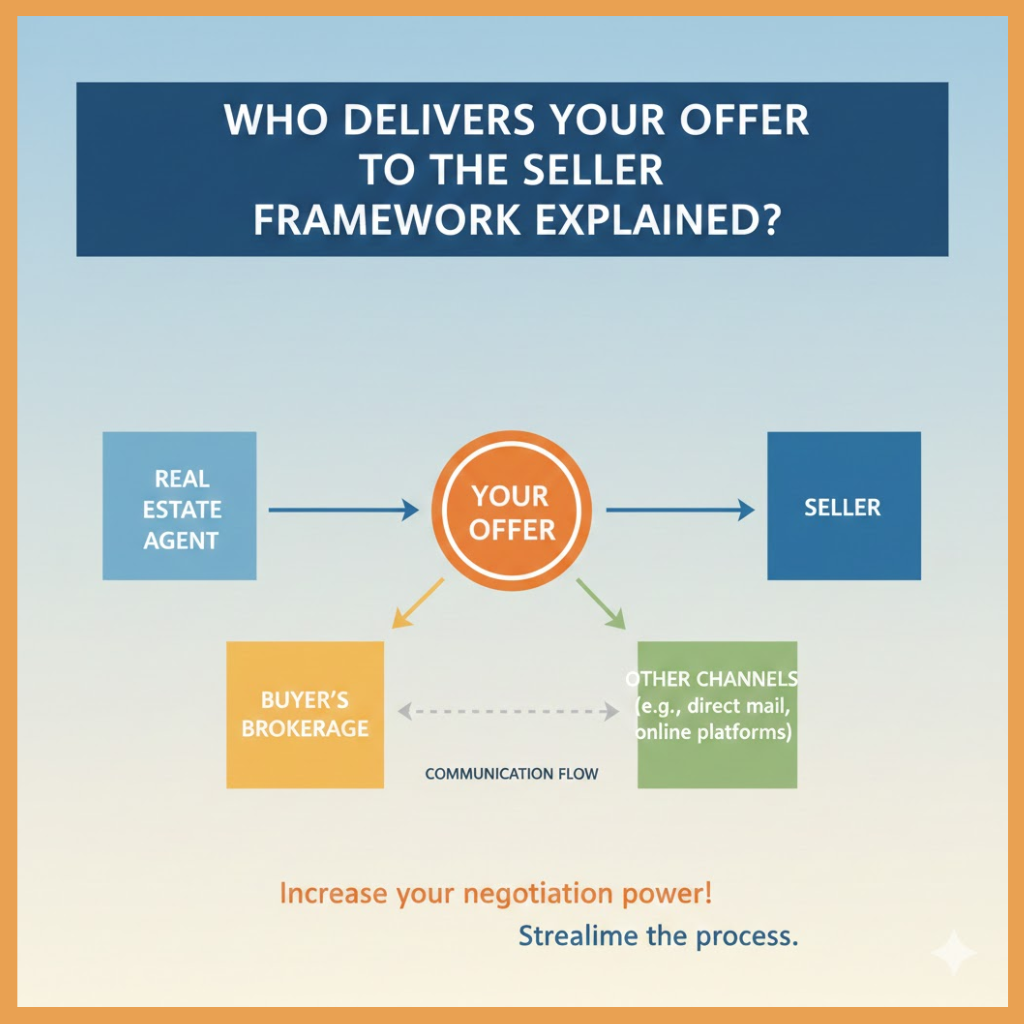

Selling an offer is only half the equation. The real success of any business depends on what happens after the sale. This is where the who delivers your offer to the seller framework becomes critical. Many sellers focus heavily on marketing and persuasion but fail to design a clear, reliable system for delivery. When delivery breaks down, trust erodes, refunds increase, and growth stalls.
This article explains the framework in full depth, from basic definitions to advanced execution models. Whether you are a beginner designing your first offer or an advanced operator scaling complex systems, this guide will help you align promises with reality and build long-term credibility.
Understanding the Who Delivers Your Offer to the Seller Framework
What the framework means
The who delivers your offer to the seller framework defines who is operationally responsible for fulfilling the promise made during the sale. It clarifies ownership of execution, accountability, and value transfer from seller to buyer.
In simple terms, it answers one question: After the customer pays, who actually makes the result happen?
This framework sits at the intersection of sales, operations management, and customer experience. Without it, offers often succeed in conversion but fail in retention.
Why delivery matters more than persuasion
Persuasion creates expectation. Delivery determines satisfaction. When there is a mismatch between promise and execution, the problem is rarely marketing—it is delivery architecture.
From Google’s perspective, delivery is a trust signal. Businesses that demonstrate consistent, transparent fulfillment create better user experiences, which aligns with search quality principles such as reliability, expertise, and usefulness.
Seller Responsibility vs Delivery Ownership
Is the seller always responsible for delivery?
Legally and ethically, the seller owns the outcome, even if execution is delegated. The framework separates responsibility from execution:
- Seller’s responsibility: Accountability for the result
- Delivery ownership: The person, team, or system that executes the work
Confusion between these two is a common source of delivery failure.
Internal delivery vs outsourced fulfillment
There are three common seller-side delivery models:
- Internal delivery model
The seller’s own team handles fulfillment using internal workflows, project management systems, and customer success processes. - Outsourced fulfillment model
Execution is handled by third-party providers, white-label fulfillment partners, or contractors. - Hybrid delivery model
Core execution is internal, while specialized tasks are outsourced.
Each model has trade-offs in scalability, control, and risk.
Offer Delivery Mechanisms Explained
Digital offer delivery systems
Digital offers rely heavily on automation and backend systems. Common delivery mechanisms include:
- Learning management systems
- Membership portals
- CRM-driven onboarding flows
- Automated email sequences
- Workflow automation tools
Here, delivery accountability depends on system reliability and process clarity rather than individual effort.
Physical product fulfillment models
For physical products, delivery involves a service delivery chain that may include:
- Inventory management
- Warehousing
- Logistics providers
- Shipping and tracking systems
The seller remains accountable even when fulfillment infrastructure is external.
Service-based execution workflows
Service offers require the most precise delivery system design. Execution depends on people, processes, and timing. Typical elements include:
- Onboarding process
- Service-level agreements (SLA)
- Fulfillment team roles
- Delivery milestones
- Feedback loops
Service delivery failures often come from unclear role definition rather than a lack of skill.
Backend Execution and Fulfillment Architecture
Internal teams and delivery roles
A strong offer fulfillment architecture defines roles clearly:
- Delivery owner: Oversees execution integrity
- Fulfillment team: Performs the core service
- Customer success: Manages expectations and outcomes
- Operations management: Maintains systems and workflows
When these roles overlap or remain undefined, execution dependency mapping becomes unclear.
Automation and system dependencies
Automation increases scalability but introduces risk if dependencies are hidden. A delivery system should document:
- System triggers
- Failure points
- Manual overrides
- Accountability paths
This transparency supports delivery governance and reduces execution ambiguity.
Promise-to-Delivery Alignment
Why promise-delivery mismatch happens
Most delivery problems originate in the sales message. Common causes include:
- Overpromising results
- Underestimating execution complexity
- Ignoring delivery scalability bottlenecks
- Misaligned value proposition
The framework forces sellers to audit offers before scaling.
How to align promises with execution.
Alignment requires:
- Mapping the offer lifecycle execution from sale to outcome
- Identifying delivery friction points
- Validating delivery readiness
- Stress-testing fulfillment infrastructure
This creates operational proof of delivery before growth.
Common Delivery Failures Sellers Make
Role ambiguity in delivery
When no one owns execution explicitly, tasks fall through gaps. Delivery role ambiguity often appears during growth phases.
Scaling without delivery infrastructure
High conversion without backend execution capacity leads to:
- Missed deadlines
- Quality decline
- Customer dissatisfaction
Delivery scalability must precede aggressive marketing.
Ignoring delivery trust signals
Customers look for signals such as onboarding clarity, progress updates, and transparency. These operational trust signals influence retention as much as results.
Measuring Delivery Effectiveness
Key delivery performance indicators
Effective delivery systems track:
- Time to fulfillment
- Outcome consistency
- Customer effort required
- Support requests
- Retention rates
These metrics reveal execution integrity more accurately than sales numbers.
Delivery audits and accountability
A periodic offer execution audit helps sellers identify:
- Bottlenecks
- Dependency risks
- Process gaps
- Fulfillment transparency issues
This supports long-term offer stability.
High-Ticket vs Low-Ticket Delivery Models
High-ticket offer delivery
High-ticket offers rely on:
- Personalized execution
- Strong customer success involvement
- Clear delivery accountability models
Failure here damages reputation quickly.
Low-ticket offer delivery
Low-ticket offers depend on:
- Automation
- Self-service systems
- Scalable delivery pipelines
Here, system reliability matters more than individual interaction.
Also read: What Is Trucofax and How Does It Work for Verification and Trust
Service vs Product Offer Delivery
Product-based delivery considerations
Product offers emphasize logistics, quality control, and consistency. The delivery system must absorb volume fluctuations without breaking.
Service-based delivery considerations
Service offers depend on people. Training, documentation, and workflow clarity become the core fulfillment infrastructure.
Designing a Scalable Offer Delivery Framework
Step-by-step delivery design process
- Define the promised outcome
- Map the execution workflow
- Assign delivery ownership
- Identify system and human dependencies
- Create accountability checkpoints
- Measure and refine
This process transforms abstract offers into operational systems.
Risk mitigation and delivery governance
Strong frameworks include:
- Backup delivery resources
- Clear escalation paths
- Documented processes
- Delivery failure prevention mechanisms
Governance protects boththe seller and the customer.
Real-World Analogy: Selling vs Delivering
Selling an offer is like selling a plane ticket. Delivery is the entire flight operation: pilots, fuel, maintenance, air traffic control, and landing. The passenger judges the experience based on the journey, not the ticket.
Similarly, customers evaluate offers based on execution, not persuasion.
Final Delivery Checklist for Sellers
Before scaling any offer, confirm:
- Delivery ownership is clearly defined
- Fulfillment systems are documented
- Roles and responsibilities are mapped
- Automation dependencies are visible
- Customer experience flows are tested
- Measurement systems are active