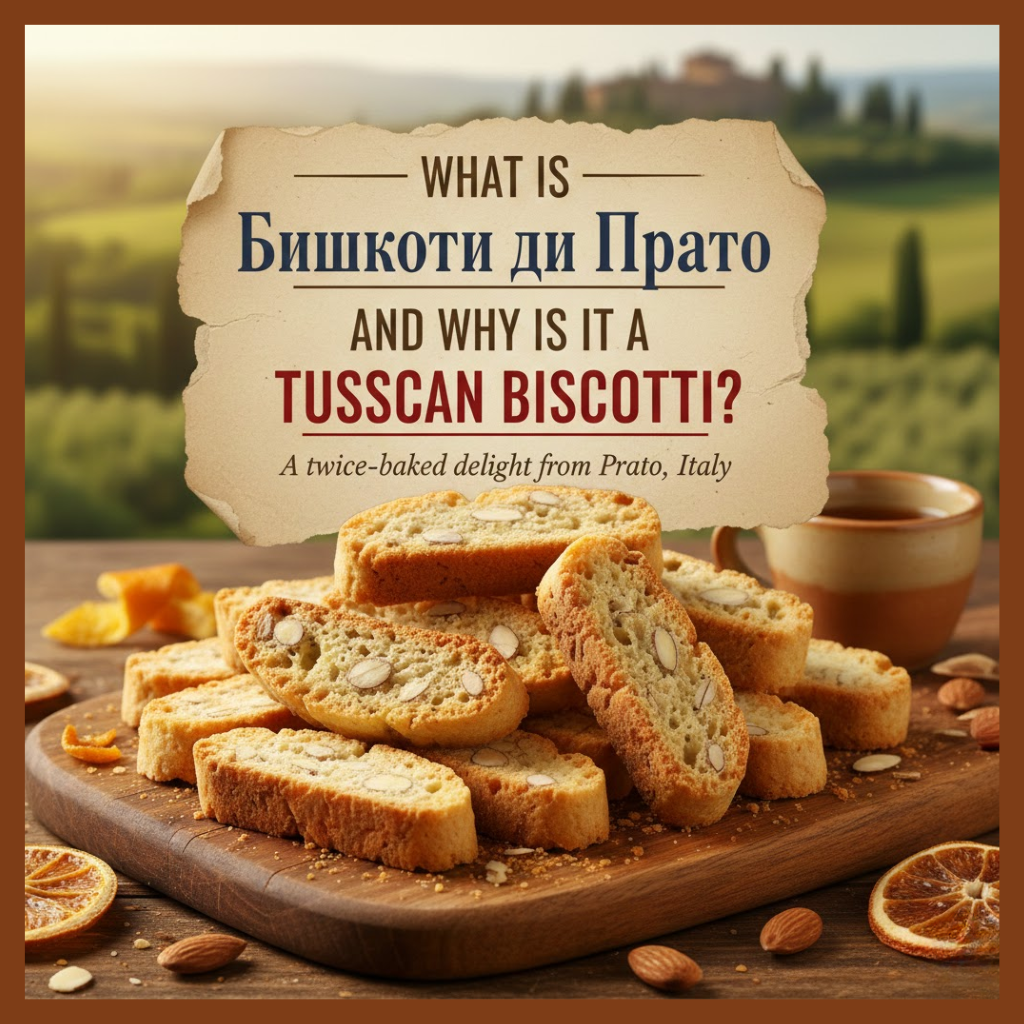

Biscotti di Prato, written in Italian as Бишкоти ди Прато, is often misunderstood outside Italy. Many people casually call all Italian biscotti the same thing, assuming they are simply crunchy cookies meant for coffee. In reality, Biscotti di Prato represent a precise culinary tradition rooted in Tuscany, shaped by history, food science, and cultural habits that go far beyond a basic biscuit.
This guide explains what Biscotti di Prato truly are, why they are made the way they are, how they differ from similar biscuits, and why their hardness, dryness, and long shelf life are not flaws but deliberate design choices. Whether you are a beginner curious about Italian food or an advanced reader interested in baking science and authenticity, this article covers the topic in full depth.
What Are Biscotti di Prato?
Biscotti di Prato are traditional Tuscan almond biscuits made with a simple egg-based dough, baked twice to remove moisture and create a firm, dry texture designed for long preservation and dunking in wine.
They originate from the city of Prato in Tuscany and are traditionally prepared without butter or oil. Their defining characteristics are:
- Whole almonds are distributed through the dough
- A dry, crunchy structure
- A long natural shelf life
- A neutral sweetness that pairs with wine
The word “biscotti” itself comes from the Latin bis coctus, meaning “twice cooked,” which directly describes the baking process.
The Origins of Biscotti di Prato in Tuscany
Why Prato Became the Biscotti Capital
Prato, located near Florence, was historically a center of trade and textile production. Bakers in the region needed food that could last without refrigeration, remain safe during transport, and provide energy without spoiling. Biscotti di Prato solved all of these problems.
Their hardness was not accidental. By removing as much moisture as possible during baking, bakers created a product that resisted mold and bacterial growth. This made biscotti ideal as travel food and long-term stored food, centuries before modern preservation methods.
A Biscuit Designed for Preservation
Unlike soft pastries meant to be eaten fresh, Biscotti di Prato were engineered for durability. Their structure reflects:
- Low water activity levels
- High protein coagulation from eggs
- Controlled starch gelatinization
- Slow, even moisture evaporation
This combination allowed the biscuits to stay edible for weeks or even months when stored correctly.
Biscotti di Prato vs Cantucci: Understanding the Difference
One of the most common points of confusion is the difference between Biscotti di Prato and cantucci.
Structural and Ingredient Differences
While closely related, they are not identical.
| Feature | Biscotti di Prato | Cantucci Toscani |
|---|---|---|
| Origin | Prato, Tuscany | Broader Tuscany |
| Butter | Traditionally absent | Sometimes included |
| Texture | Very dry and firm | Slightly less hard |
| Almonds | Whole, skin-on | Whole or blanched |
| Sweetness | Balanced, restrained | Often sweeter |
Cantucci Toscani IGP is a protected designation that allows slight variations, while Biscotti di Prato follows a stricter historical formula.
Traditional Ingredients and Why They Matter
Almond Selection and Distribution
Almonds are not decorative. They are structural and aromatic components.
- Whole almonds release oil slowly during baking
- Almond oil contributes to aroma compounds
- Even distribution prevents weak crumb zones
Uneven almond placement can cause slicing cracks or structural failure during the second bake.
Eggs, Flour, and Sugar Ratios
Eggs are the only source of fat in traditional Biscotti di Prato. Their proteins coagulate during baking, creating rigidity. Flour provides starch for structure, while sugar supports browning and aroma through the Maillard reaction.
Butter is traditionally absent because it increases moisture retention and shortens shelf life.
The Double-Bake Process Explained
First Bake: Structure Formation
The first bake transforms soft dough into a firm loaf.
Key processes include:
- Protein coagulation from eggs
- Initial starch gelatinization
- Surface crust formation
At this stage, the interior still contains moisture.
Second Bake: Moisture Removal and Crunch
After slicing, the biscuits return to the oven.
This phase:
- Drives off internal moisture
- Stabilizes crumb porosity
- Creates the signature crunch
Baking airflow and temperature control are critical. Too hot, and the surface burns before the interior dries. Too cool, and the biscuits remain soft.
Why Biscotti di Prato Are Hard by Design
Texture Is a Feature, Not a Flaw
Many modern bakers try to soften biscotti, but hardness is central to their identity. The firmness allows biscotti to:
- Be dipped into Vin Santo without dissolving
- Retain structure over time
- Preserve aroma during storage
The crunch acoustics, the sound when bitten, are a sign of correct moisture removal.
The Science Behind the Crunch
Crunch results from:
- Low water activity
- Dense protein networks
- Controlled crumb porosity
These factors work together to prevent chewiness.
Aroma Development During Baking
Biscotti di Prato have a subtle but complex aroma. It develops during slow baking as sugars and proteins react.
Key aroma contributors include:
- Almond oil oxidation
- Maillard reaction compounds
- Caramelized sugar notes
Rushing the bake reduces aroma complexity and leads to a flat flavor profile.
Also read: What Is Crocolini and How Is It Different From Broccoli
Cultural Consumption: How Italians Eat Biscotti di Prato
Vin Santo Pairing Tradition
Biscotti di Prato are traditionally eaten with Vin Santo, a Tuscan dessert wine.
The ritual works because:
- The wine softens the biscuit
- The biscuit absorbs sweetness
- Almond aromas complement the wine’s dried fruit notes
This pairing explains why biscotti are dry by design.
When and Why Biscotti Are Eaten
They are not limited to dessert. In Tuscany, biscotti may appear:
- After meals
- With afternoon coffee
- During holidays and gatherings
They are shared food, meant to last and be revisited.
Storage and Shelf Life Without Preservatives
Historical Preservation Techniques
Before refrigeration, Biscotti di Prato relied on:
- Moisture removal
- Dense structure
- Cool, dry storage
No chemical preservatives were needed.
Modern Storage Best Practices
To maintain quality:
- Store in airtight containers
- Avoid humidity exposure
- Keep away from strong odors
Properly stored biscotti can remain enjoyable for weeks.
Common Mistakes and Misconceptions
Why Biscotti Crack When Slicing
Cracking usually occurs due to:
- Slicing too early or too late
- Uneven almond distribution
- Incorrect dough hydration
Timing matters. The loaf should be warm but not hot.
Are Biscotti Supposed to Be Soft?
Authentic Biscotti di Prato are not soft. Softness indicates excess moisture or incomplete second baking.
Modern Variations vs Authentic Biscotti di Prato
Acceptable Adaptations
Some modern variations add:
- Citrus zest
- Spices
- Slight sweetness adjustments
These do not break authenticity if structure and process remain intact.
What Breaks Authenticity
Authenticity is compromised by:
- Butter-heavy dough
- Soft cookie textures
- Skipping the second bake
At that point, the product is no longer Biscotti di Prato.
Nutritional and Structural Considerations
Compared to many cookies, Biscotti di Prato are:
- Lower in fat
- Free from dairy
- Portion-controlled due to hardness
Their density encourages slow eating, aligning with traditional Mediterranean food habits.
FAQS: Бишкоти ди Прато
What is Biscotti di Prat,o and where does it come from
Biscotti di Prato are traditional Tuscan almond biscuits originating from the city of Prato in Italy. They are made with a simple egg-based dough, baked twice to remove moisture, and are known for their firm texture and long shelf life.
Why are Biscotti di Prato baked twice?
They are baked twice to fully remove internal moisture. The first bake sets the structure, while the second bake dries the slices, creating the signature crunch and allowing the biscuits to last longer without preservatives.
Are Biscotti di Prato supposed to be very hard?ard
Yes, hardness is intentional. Biscotti di Prato are designed to be dry and firm so they can be dipped into wine or coffee without falling apart, which is part of traditional Italian consumption.
What is the difference between Biscotti di Prato and cantucci
Biscotti di Prato follow a stricter traditional recipe without butter, while cantucci may include variations such as added fats or different sweetness levels. Texture and authenticity are the main differences.
How should Biscotti di Prato be stored to stay fresh
They should be stored in an airtight container in a cool, dry place. When kept away from humidity, Biscotti di Prato can maintain their crunch and flavor for several weeks.