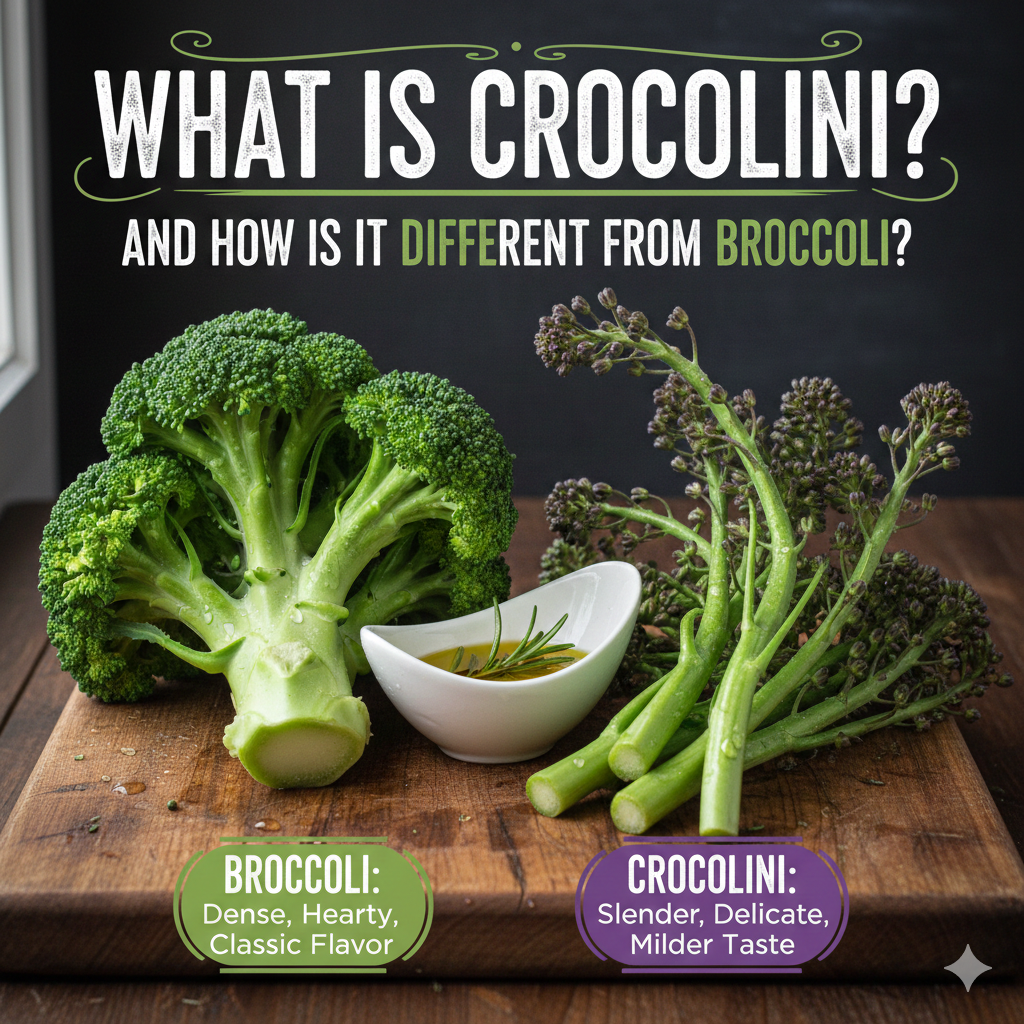

If you have ever spotted long, slender green stalks with small florets at a grocery store or farmers market and wondered whether they were broccoli, broccolini, or something else entirely, you are not alone. Crocolini is a lesser-known vegetable that often creates confusion, yet it offers a unique balance of flavor, texture, and nutrition that sets it apart. Understanding what crocolini is, how it differs from similar vegetables, and how to use it properly can completely change the way you cook and eat greens.
This guide explains crocolini from the ground up—what it is, where it comes from, how it tastes, how to cook it, and why many chefs quietly prefer it over traditional broccoli.
What Is Crocolini?
Crocolini is a tender, long-stemmed cruciferous vegetable belonging to the Brassica oleracea family. It is a broccoli–Chinese kale hybrid developed to combine the sweetness and tenderness of kale with the mild flavor of broccoli. Unlike standard broccoli, crocolini features thin edible stems, smaller florets, and a more delicate texture.
In practical terms, crocolini behaves more like a refined version of broccoli. The entire stalk is edible, it cooks quickly, and it has a noticeably lower bitterness level when prepared correctly.
Crocolini Origin and Hybrid Development
Crocolini was created through selective crossbreeding, not genetic modification. Plant breeders aimed to improve stem tenderness and reduce sulfur-heavy bitterness commonly associated with mature broccoli heads. By blending broccoli genetics with Chinese kale, they achieved a vegetable that matures faster, has softer fiber composition, and retains a balanced flavor profile.
This hybrid development explains why crocolini is often mistaken for broccolini. While they share similarities, they are not identical in structure or taste.
Crocolini vs Broccoli vs Broccolini
Understanding the differences helps you choose the right vegetable for your cooking needs.
| Feature | Crocolini | Broccoli | Broccolini |
|---|---|---|---|
| Stem thickness | Thin, very tender | Thick, fibrous | Thin |
| Floret size | Small and compact | Large head | Small |
| Bitterness level | Low | Medium to high | Low |
| Edible parts | Entire stalk | Mostly florets | Entire stalk |
| Cooking time | Very short | Longer | Short |
Crocolini stands out for its stem tenderness and smoother texture, especially when sautéed or roasted. Unlike broccoli, it rarely requires peeling or trimming.
Taste and Texture Profile of Crocolini
Crocolini has a mild, slightly sweet taste with subtle vegetal notes. The bitterness commonly associated with broccoli is present only in trace amounts, largely due to lower concentrations of sulfur compounds. When cooked properly, the stems remain crisp-tender while the florets soften without turning mushy.
Texture-wise, crocolini is one of the most forgiving cruciferous vegetables. Its floret structure absorbs oils and seasonings evenly, making it ideal for simple preparations.
Also read: What Is Koriandri and How Is Coriander Different From Cilantro
Nutritional Profile of Crocolini
Crocolini offers high nutritional density without being heavy or starchy. It provides a strong balance of vitamins, minerals, and bioactive compounds.
Key nutrients include:
- Vitamin C for immune support
- Vitamin K for bone health
- Folate for cellular function
- Dietary fiber for digestion
- Antioxidants that help counter oxidative stress
Crocolini also contains glucosinolates, compounds associated with anti-inflammatory and protective health benefits. Because the stems are softer, the fiber composition is easier for many people to digest compared to standard broccoli.
Health Benefits of Crocolini
Supports Digestive Health
The gentle fiber structure and lower bitterness make crocolini easier on the gut. People sensitive to cruciferous vegetables often tolerate crocolini better, especially when lightly cooked.
Rich in Antioxidants
Crocolini contains antioxidant phytochemicals that help neutralize free radicals. These compounds support long-term cellular health and may contribute to reduced inflammation.
Heart and Metabolic Support
With minimal calories and high nutrient density, crocolini fits well into heart-conscious and metabolic-friendly diets. It supports balanced blood sugar levels and promotes satiety without heaviness.
How Crocolini Is Grown
Crocolini thrives in cool-season climates and well-drained soil. Farmers typically harvest it earlier than broccoli, which contributes to its tenderness. Harvest timing is critical—if left too long, the stems toughen and bitterness increases.
Crocolini is commonly grown using sustainable agriculture practices due to its relatively fast growth cycle and efficient yield.
Seasonality and Availability
Crocolini is generally available from late fall through early spring, though availability can vary by region. It is most commonly found fresh rather than frozen, as freezing can alter its delicate texture.
Farmers’ markets often carry higher-quality crocolini with better freshness indicators than large-scale retailers.
How to Select Fresh Crocolini
When choosing crocolini, look for:
- Bright green color without yellowing
- Firm, straight stalks
- Tight florets with no flowering
- No limp or rubbery texture
Fresh crocolini should snap cleanly when bent, indicating proper hydration and fiber softness.
Storage and Shelf Life
To maintain freshness:
- Store unwashed crocolini in a breathable bag.
- Keep it in the refrigerator’s vegetable drawer.
- Use within 4 to 6 days for the best texture.
Excess moisture shortens shelf life, so avoid sealing it in airtight containers.
Best Ways to Cook Crocolini
Crocolini’s cooking behavior is one of its strongest advantages.
Sautéing
Quick sautéing preserves crunch while enhancing natural sweetness. Use medium heat and avoid overcrowding the pan.
Roasting
Roasting caramelizes the stems and florets evenly. A moderate oven temperature prevents nutrient loss and bitterness.
Blanching
Brief blanching works well for salads or meal prep. Immediately shocking in cold water preserves color and texture.
Compared to broccoli, crocolini retains more nutrients during short cooking times due to its thinner stalks.
Flavor Pairings That Work Best
Crocolini pairs exceptionally well with:
- Garlic and shallots
- Lemon zest or mild acidity
- Olive oil or sesame oil
- Mild spices like white pepper or paprika
- Protein dishes such as fish, tofu, or chicken
Because the bitterness level is low, heavy masking flavors are unnecessary.
Crocolini in Different Cuisines
Crocolini adapts easily across cuisines:
- In Mediterranean cooking, it is often sautéed with olive oil and herbs.
- In Asian stir-fry techniques, it cooks quickly without releasing excess water.
- In plant-based diets, it works as a texture-forward vegetable rather than filler.
This versatility makes crocolini a reliable choice for both simple meals and refined dishes.
Common Cooking Mistakes to Avoid
- Overcooking, which dulls flavor and softens stems excessively
- High heat without oil, causing uneven bitterness
- Excessive boiling, leading to nutrient loss
- Ignoring stem length, which can cause uneven doneness
Treat crocolini gently, and it rewards you with consistent results.
Dietary Considerations and Safety
Crocolini is suitable for most diets, including low-carb, keto, and plant-forward eating patterns. While it can be eaten raw, lightly cooking it improves digestibility and nutrient absorption for many people.
Those sensitive to cruciferous vegetables may find crocolini easier to tolerate due to its balanced sulfur compound profile.
Frequently Asked Questions About Crocolini
Is crocolini the same as broccolini?
No. While similar, crocolini has softer stems and a slightly sweeter taste.
Can you eat the entire crocolini stalk?
Yes. The entire stalk is edible and intentionally bred for tenderness.
Does crocolini lose nutrients when cooked?
Short cooking methods like sautéing or steaming preserve most nutrients.
Is crocolini genetically modified?
No. It is a naturally crossbred hybrid.
Is crocolini better than broccoli?
It depends on preference. Crocolini offers tenderness and mild flavor, while broccoli provides a denser texture.
Key Takeaways
Crocolini is a thoughtfully developed vegetable that bridges the gap between broccoli and leafy greens. Its tender stems, balanced flavor, and versatile cooking behavior make it a standout option for everyday meals and refined dishes alike.
By understanding how to select, store, and cook crocolini properly, you can enjoy its full nutritional and culinary potential without the common drawbacks associated with traditional broccoli.